
Why Birds Fly in Front of Cars, and Why They Cannot Get Out of the Way
Birds do not have a death wish. We explain why birds fly in front of cars, why they cannot dodge fast vehicles, and what keeps drawing them to the road.
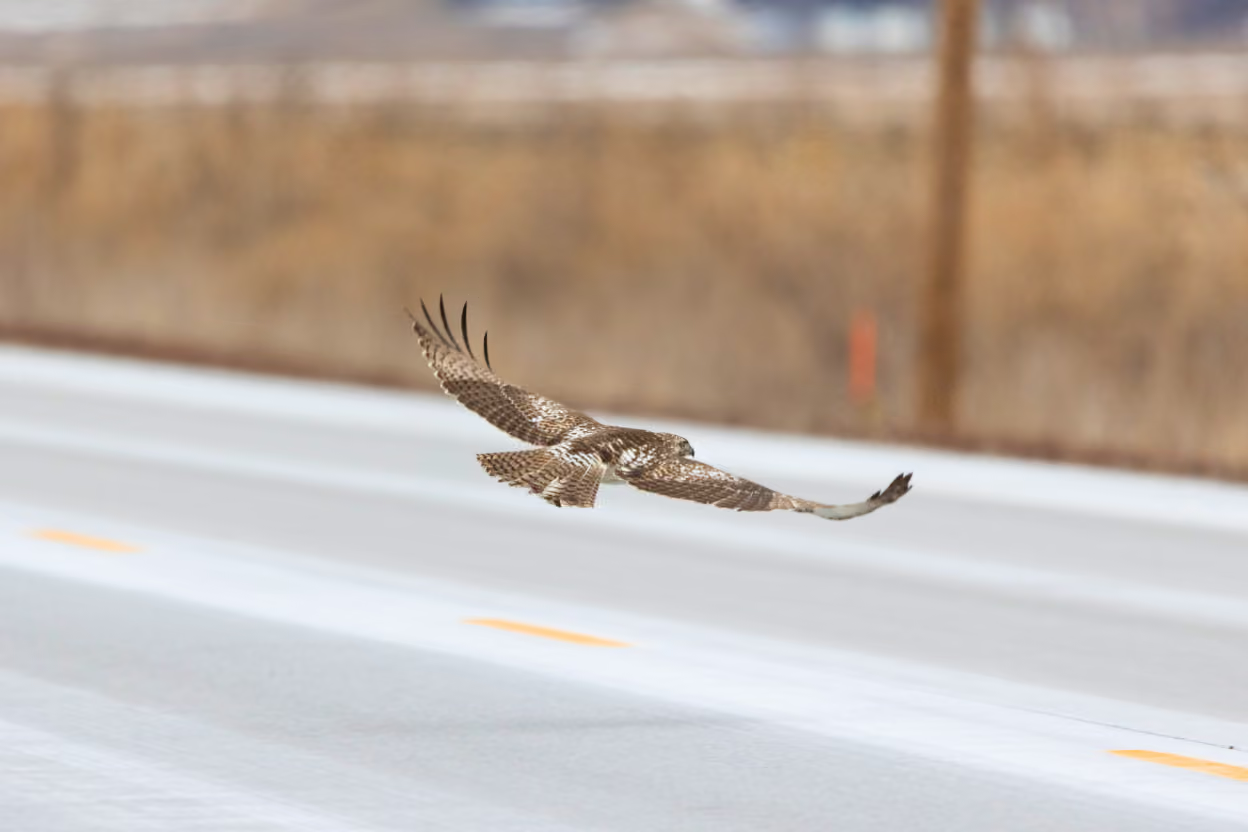
Two scenes from a lifetime of driving stay with us. The first is a hawk lifting off a deer carcass on the shoulder, heavy with its meal, climbing a beat too slowly as the next car comes through. The second is a grouse stepping out of the roadside brush at exactly the wrong moment, unhurried, as if the road were just another forest clearing. Neither bird had a death wish. Both were doing something completely ordinary, and the road turned it lethal. That gap, between what a bird is built to handle and what a moving vehicle actually does, is the whole story of why birds are hit by cars.
People often assume birds either fly in front of cars on purpose or are simply too foolish to move. They are neither. The truth is more interesting, and it explains why slowing down helps so much. The continental scale of road mortality, an estimated 200 million or more birds a year in the United States, we set alongside the other major threats in the causes of bird deaths in North America. Here we explain the behavior.
Why birds do not get out of the way in time
The key discovery is that birds judge an oncoming threat by distance, not by speed. When something approaches, a bird waits until it crosses a certain distance and then flushes, a threshold biologists call the flight initiation distance. That system works perfectly against predators, which all move within a familiar range of speeds. It fails against cars. In studies where birds faced approaching vehicles, they timed their escape to the road, not to the car. On a fast road they flushed early, on a slow road they let the vehicle come close, but they were responding to the speed they expected rather than the speed actually bearing down on them. When a real car arrived faster than that expectation, it covered the gap before the bird's escape could fire.
One study with Turkey Vultures lured to road carcasses showed it plainly. The birds flew off in good time when vehicles came at around 37 miles per hour or slower, but at highway speed they often failed to lift off in time at all. The deeper reason is simple. Cars have existed for only about a century, which is far too little time for birds to have evolved a sense for objects that move faster than any predator ever did. They are not misjudging out of stupidity. They are running ancient software against a threat it was never written for.
Why birds are on the road in the first place
A bird has to be near the road to be hit by a car, and roads are surprisingly full of reasons to linger. The shoulder offers grit, the tiny stones birds swallow to grind food in their gizzards, which is why you so often see small birds working the gravel edge. Spilled grain from trucks and the seed heads of roadside weeds draw seed eaters. In winter, road salt attracts birds the way a mineral lick does. Warm asphalt radiates heat that birds bask in on cool mornings and that also draws insects, which in turn pulls in the birds that hunt them. And then there is carrion. Roadkill is a reliable meal, and it brings in exactly the birds from our first scene, the scavengers and raptors that drop onto a carcass and are slow and heavy getting back up.
One attractant is entirely our doing, and it is worth singling out. Food tossed from a car window, an apple core or a crust, does not just vanish. It rots on the verge, draws rodents, and the rodents draw hawks and owls down to hunt the very edge of the traffic. A small thoughtless habit seeds the roadside with prey and predators alike.
The birds most at risk
Some birds pay far more than others. Ground feeders that work the shoulder are constantly in the strike zone. Hawks and owls that hunt low along verges, and scavengers like vultures, eagles, and crows that feed on roadkill, are caught again and again because they cannot gain height quickly with a full crop. Large, heavy, or slow birds such as grouse, pheasants, gulls, and pigeons lack the sharp upward jink that saves smaller, more agile species. And the most heartbreaking group is the youngest. In late spring and early summer, fledglings that are barely flying spend days near the ground with no judgment yet for traffic, which is why a quiet country road can be deadliest in the weeks after the nesting season. Activity peaks at dawn and dusk, when many of these birds are most active and the light is poorest for everyone.
The same trap as a window
If this sounds familiar, it should. A car and a pane of glass are two versions of the same problem. In both cases a bird's senses, finely tuned over millions of years, meet something modern they were never designed to read, a clear barrier in the case of glass and an impossibly fast object in the case of a car. We explore the daytime version of that mismatch in why birds hit windows. Understanding either one points to the same kind of answer, which is that the fix is on our side, not the bird's.
The good news with roads is that a few simple habits behind the wheel make a real difference, precisely because slowing down gives a bird's ancient escape system enough time to work. We lay those out, along with what to do if you find an injured bird on the roadside, in how to prevent birds from being hit by cars.
FAQ
Not because they have a death wish. Birds judge an approaching threat by distance rather than speed, flushing once it crosses a set threshold. That works against predators, which move within a familiar range of speeds, but it fails against a car traveling faster than anything in their evolutionary past. The vehicle covers the gap before the bird's escape response can fire, so what looks like flying into the car is really a timing failure.
They are not being stubborn or slow witted. Studies show birds time their escape to the speed they expect on a given road, not to the actual car bearing down on them, so on a fast road a faster vehicle arrives before they lift off. Cars have existed for only about a century, far too little time for birds to evolve a sense for objects that move faster than any natural predator.
Yes, in very large numbers. Vehicle collisions are estimated to kill on the order of 200 million or more birds a year in the United States, though every figure here is an estimate. The toll falls hardest on birds that forage on road shoulders, hawks and owls that hunt the verges, scavengers feeding on roadkill, and inexperienced young birds in their first weeks out of the nest.
Roads offer more than they appear to. Birds gather on the surface and shoulder for grit to grind their food, spilled grain and weed seeds, road salt in winter, warmth radiating off the asphalt, insects drawn to that heat, and roadkill that attracts scavengers and raptors. Each of these pulls birds into the path of traffic for reasons that have nothing to do with the cars themselves.
Only move it if you can do so without putting yourself in danger from traffic. Handle the bird as little as possible, place it somewhere quiet, dark, and contained, and do not offer food or water or try to nurse it yourself. If it cannot fly, shows visible injury, or was caught by a predator, contact a licensed wildlife rehabilitator promptly, since the right care early gives it the best chance.